







The Communication Authority of Kenya (CAK) has introduced a new licensing category, the Micro Networks and Service Provider (MNSP) license, marking one of the biggest changes for small and medium-sized Internet providers in recent years.
The new license is designed for operators that build and provide electronic communications services within a single county. It creates a clearer regulatory path for county-based ISPs, community fiber networks, public Wi-Fi providers and other local broadband businesses that previously had to fit into licensing categories intended for much larger operators.
While the MNSP license lowers the barrier to entry for local providers, it still comes with clear obligations. Licensees must meet requirements covering network rollout, customer service, billing accuracy, infrastructure sharing and annual regulatory compliance.
This guide explains what the MNSP license is, who it is for, what services it permits, how much it costs and what it means for the future of small ISPs and WISPs in Kenya.
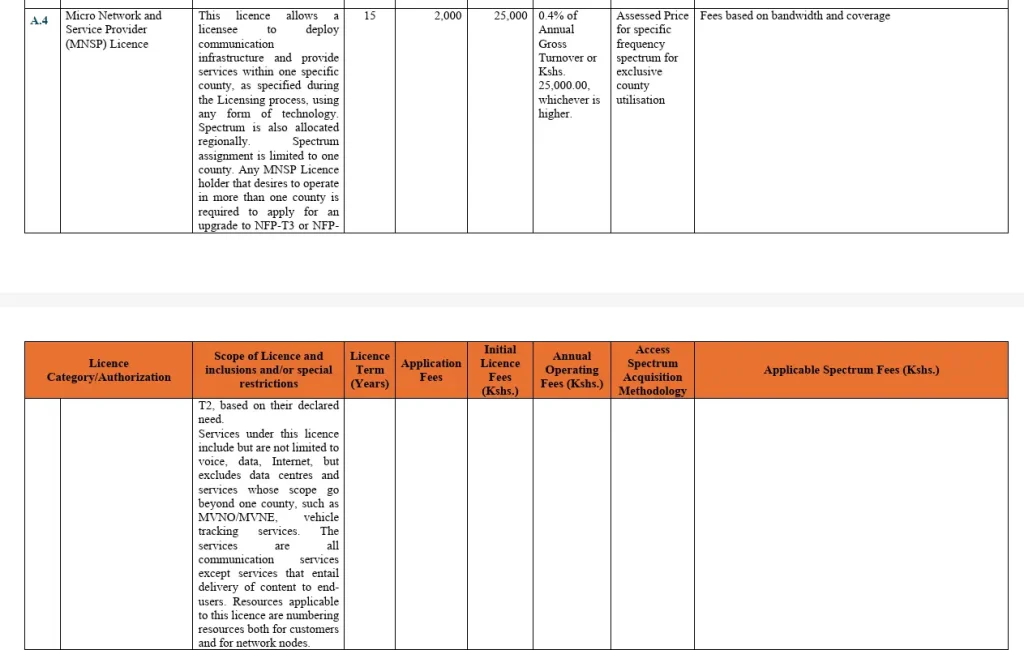
The Micro Networks and Services Provider (MNSP) license authorizes a company to deploy communications infrastructure and provide electronic communications services within a single county in Kenya.
Unlike some existing licenses that separate network ownership from service provision, the MNSP license allows operators to both build their network and deliver services to end users under one license.
An MNSP licensee can deploy infrastructure such as fiber optic networks, wireless links, switching and routing equipment, then use that infrastructure to offer services including internet access, data and voice. However, the license does not cover services such as data centers, Mobile Virtual Network Operators (MVNOs), Mobile Virtual Network Enablers (MVNEs) or operations that extend beyond a single county.
If an operator intends to expand into multiple counties, they must transition to the appropriate national licensing categories, such as an Application Service Provider (ASP) and the relevant Network Facilities Provider (NFP) license.
The MNSP license is part of the Communications Authority of Kenya’s effort to modernize the country’s telecommunications licensing framework. As internet access continues to expand, the regulator recognized that many operators now serve only a single county and do not require the broader licenses designed for nationwide providers.
The new license creates a dedicated category for these county-based operators. It allows them to build communications infrastructure and offer electronic communications services under a single license, provided they operate within one county. Operators that wish to expand beyond county borders must migrate to the appropriate national license categories.
For small ISPs, WISPs and community broadband providers, the MNSP license offers a licensing framework that better matches the scale of their operations while maintaining the regulatory standards expected by CAK.
Download the Revised Market Structure (June 2026) pdf version here:
The MNSP license is intended for businesses that build and operate communications networks within a single county. It is particularly suitable for operators that own their network infrastructure and provide services directly to customers.
Examples of businesses that may benefit from this license include:
The license is limited to operations within one county. Businesses planning to serve customers in multiple counties will need to obtain the appropriate national licenses, including an Application Service Provider (ASP) license and the relevant Network Facilities Provider (NFP) license.
An MNSP license, also known as the Tier 4 license, allows operators to build and operate electronic communications networks and provide services within a single county. This gives licensees the flexibility to own their infrastructure and serve customers under one regulatory framework.
Under the license, operators can provide:
The Tier 4 license also allows operators to deploy and maintain infrastructure such as fiber optic cables, wireless links, routers, switches, transmission equipment and other network facilities required to deliver these services.
However, the MNSP license does not authorize services such as Mobile Virtual Network Operators (MVNOs), Mobile Virtual Network Enablers (MVNEs), data center services or operations that extend beyond a single county. Businesses intending to offer these services or operate nationally must obtain the appropriate CAK licenses.
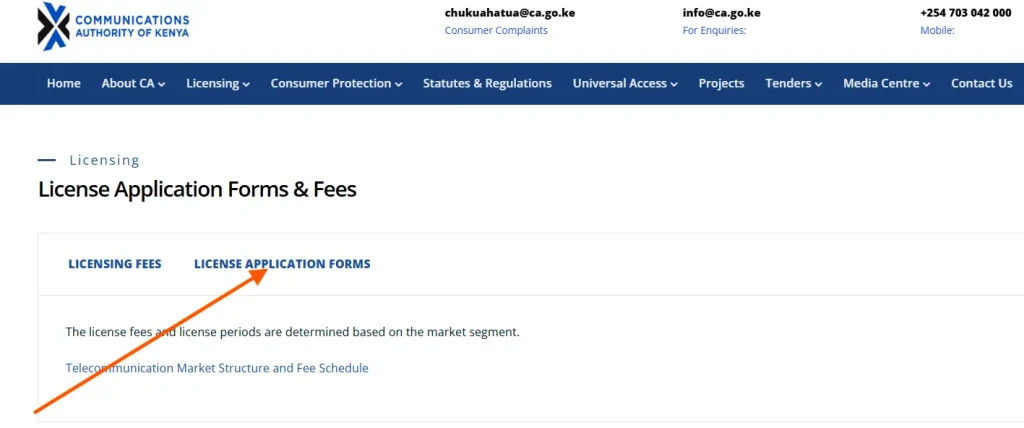
Download the Updated MNSP license application form (pdf) here:
Last update: 9.07.2026
The MNSP license, or Tier 4 license, is strictly limited to operations within a single county. License holders may build network infrastructure and provide services only within the licensed county.
If an operator expands into a second county, the MNSP license is no longer sufficient. They must obtain the appropriate national licenses before offering services outside their licensed area.
For example, an ISP operating only in Mombasa can use the Tier 4 license. However, if the business expands into Kilifi, Kwale or any other county, it must transition to the relevant national licensing framework.
An MNSP license allows operators to build, own and maintain the infrastructure needed to provide electronic communications services within a single county.
This includes:
However, where services require resources such as radio frequency spectrum or numbering, operators must obtain the necessary approvals from the Communications Authority of Kenya (CAK). The Tier 4 license does not automatically grant these resources.
Holding an MNSP license [Tier 4 license] comes with several regulatory obligations. Licensees must operate their networks in accordance with the Communications Authority of Kenya’s licensing conditions.
Key responsibilities include:
Failure to comply with these obligations may result in penalties, suspension or revocation of the license.
The Tier 4 license (T4) encourages infrastructure sharing to reduce duplication and improve network expansion. Where required by the Communications Authority of Kenya (CAK), licensees must provide reasonable access to their communications infrastructure on fair and non-discriminatory terms.
This may include sharing facilities such as towers, masts, ducts, poles and fiber infrastructure where technically and commercially feasible. Infrastructure sharing helps lower deployment costs, speeds up network rollout and reduces the environmental impact of building duplicate infrastructure.
Operators are expected to cooperate with other licensed providers while protecting network integrity and service quality.
Every Micro Network & Service Provider (MNSP) license holder must provide adequate customer support and have a clear process for handling complaints. Licensees are expected to respond to customer issues promptly and maintain records of complaints and their resolution.
CAK also requires licensees to make their customer service channels easily accessible and to treat customers fairly. These measures are intended to improve service quality and strengthen consumer protection across the telecommunications sector.
Every MNSP license holder must maintain accurate billing systems and keep proper customer and financial records. Bills issued to customers must be clear, accurate and verifiable. CAK may inspect these records to ensure compliance with the license conditions.
Licensees are also required to retain records relating to billing, customer accounts and service delivery for the period prescribed by law. Maintaining reliable records helps resolve customer disputes and demonstrates compliance during regulatory inspections.
Holding an MNSP license requires ongoing compliance with CAK regulations. License holders must submit the required reports and information to demonstrate that they continue to meet the conditions of the license.
CAK may request operational, financial or technical information during the license period. Failure to meet these obligations can lead to enforcement action, including penalties, suspension or revocation of the license.
Maintaining accurate records and meeting reporting deadlines helps ensure the license remains in good standing.
The Communications Authority of Kenya (CAK) has set the following fees for the MNSP license:
| Fee | Amount |
|---|---|
| Application fee | KSh 2,000 |
| Initial license fee | KSh 25,000 |
| Initial operating fee | KSh 25,000 |
| Annual operating fee | 0.4% of audited annual gross revenue or KSh 25,000, whichever is higher |
| Other fees | Spectrum, numbering and other applicable regulatory fees |
Any fees that remain unpaid for more than 90 days attract interest at a rate of 2% per month until they are settled.
The Communications Authority of Kenya (CAK) may suspend or revoke an MNSP license if a licensee fails to comply with the license conditions or other regulatory requirements. Before taking action, CAK must issue a notice and give the licensee an opportunity to correct the breach or make representations.
Some of the grounds for suspension or revocation include:
Where the breach is not remedied, CAK may suspend part or all of the licensed services or revoke the license in accordance with the Communications Act and the license conditions.
The introduction of the MNSP license (Tier 4 license) is good news for small and medium-sized internet providers. It gives county-based operators a dedicated licensing category that matches their size and area of operation, rather than requiring them to fit into licenses intended for nationwide providers.
For entrepreneurs planning to build a local ISP, community fiber network or public Wi-Fi business, the license provides a clear legal framework for deploying infrastructure and serving customers within one county.
However, the license is also designed with growth in mind. Operators that expand beyond a single county must migrate to the appropriate national licensing categories. This creates a clear pathway for businesses to scale while remaining compliant with CAK regulations.
The introduction of the MNSP license (Tier 4 license) marks an important shift in Kenya’s telecommunications industry. It gives county-based ISPs, WISPs and community network operators a licensing framework that better reflects how many local internet providers operate today.
For businesses planning to build or expand an internet network within a single county, the license offers a clear regulatory path while setting standards for service quality, consumer protection and compliance. Operators with ambitions to grow beyond one county can also use it as a stepping stone before transitioning to the appropriate national licenses.
As broadband demand continues to grow across Kenya, the MNSP license is expected to encourage more local investment, improve internet access and create new opportunities for entrepreneurs entering the ISP market.
If you’re planning to apply for an MNSP (Tier 4) license and need expert guidance, we’re here to help. Whether you have questions about the application process, eligibility requirements, the documents you’ll need or how to comply with CAK regulations, our team is ready to assist every step of the way.
Call us on +254 113 22 9993 or email [email protected] to speak with our team. We’ll help you understand the licensing requirements and make your application process as smooth as possible.







No Comments