



Service Set Identifier (SSID) is the name assigned to a WiFi network that allows devices such as smartphones, laptops and tablets to identify and connect to the correct wireless network.
When you search for available WiFi networks, the names you see, such as Home WiFi, Office Network or WiFi Mtaani, are SSIDs.
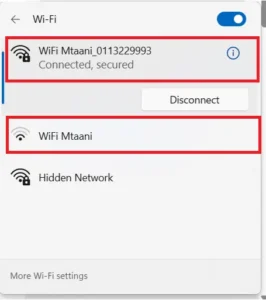
A wireless router or access point broadcasts its SSID so nearby devices can detect it. Network administrators can customize the SSID to make it easy for users to recognize the network. While some people choose to hide their SSID for added privacy, this does not provide meaningful security because the network can still be discovered with wireless scanning tools.
An SSID is different from a WiFi password. The SSID identifies the network, while the password protects it from unauthorized access. For the best security, use a unique SSID and protect it with WPA2 or WPA3 encryption and a strong password.
Related Terms: BSSID, ESSID, WiFi, Wireless Access Point, Router, WPA2, WPA3, Captive Portal, Mesh WiFi, Roaming
Tags: SSID, Service Set Identifier, WiFi, Wireless Network, Router, Access Point, BSSID, ESSID, WPA3, Captive Portal